
Important note: As ODP has undergone a rebrand and become the research arm of Outset Media Index, all reports now live in OMI’s content hub. We’ll be periodically summarizing the strongest findings on this blog, with enough context to show why they matter, and links to the full versions for those who want to explore the data in depth.
Signal #1: Headlines don’t predict the market the way you think
For years, crypto traders have relied on major news headlines as market drivers. A big story lands, Bitcoin reacts, and the explanation feels ready-made.
The report tests this across 63,926 CoinDesk headlines and 12 years of BTC price data, and the result is much less intuitive than the usual “news moves markets” logic suggests.

News volume didn’t reliably predict Bitcoin’s next direction. Sentiment barely helped either. In many cases, Bitcoin had already moved before coverage peaked, which makes media look less like a trigger and more like the final visible layer of a signal that travelled elsewhere first.
That matters because headline-driven explanations are easy to overuse in crypto. They make market behavior feel cleaner than it is, especially when information may have already spread through order flow, on-chain data, social platforms, private chats, or positioning before it becomes an article.
Read the full report to see the statistical tests, sentiment analysis, and biggest news-day examples behind the finding.
Signal #2: Media traffic doesn’t reflect real crypto usage
The second report asks a question: if crypto-native media audiences are shrinking, does that mean fewer people are actually using crypto? The data points in the opposite direction.
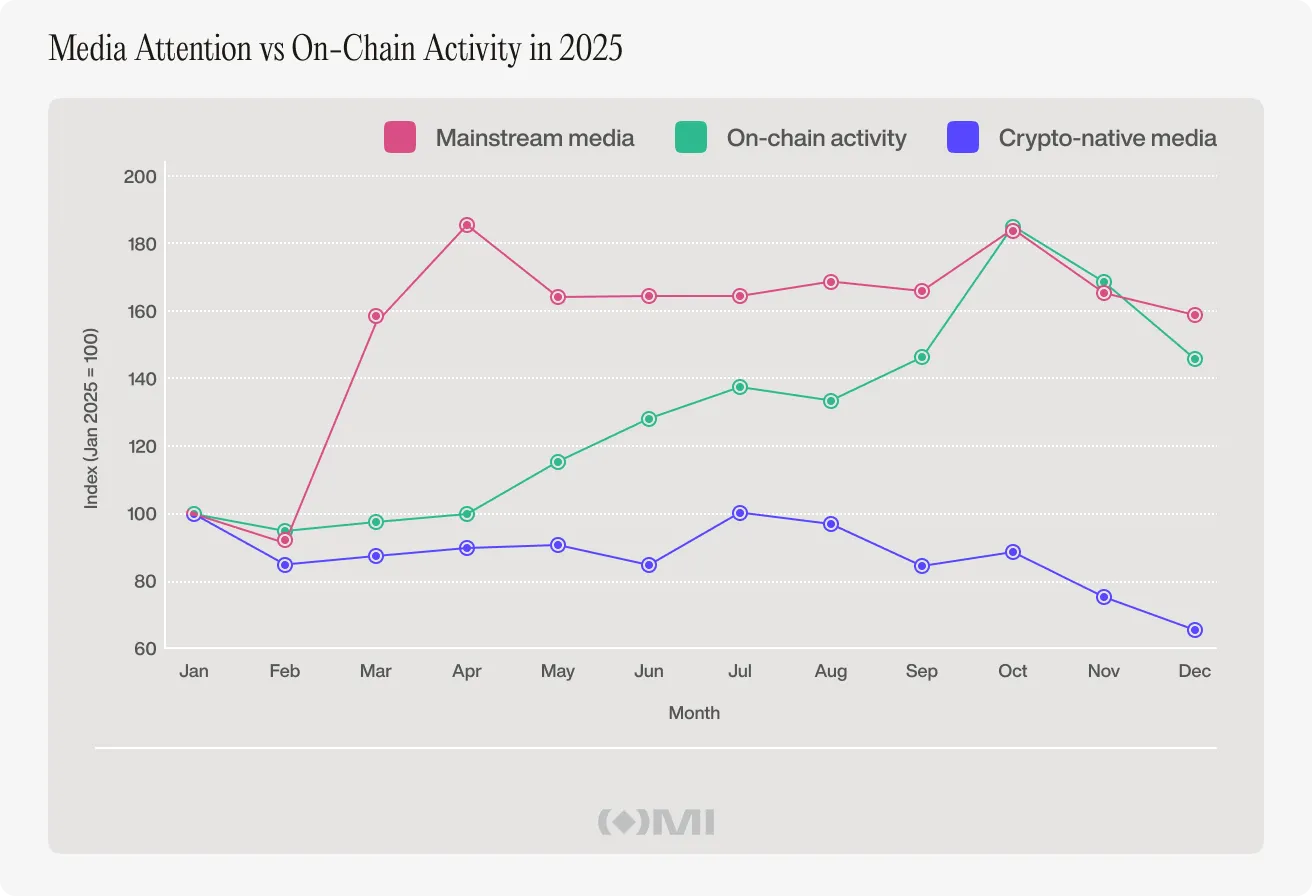
In 2025, crypto-native media traffic fell by a third, while stablecoin supply, USDT transfer volume, and DEX trading activity all expanded. The analysis breaks down where this divergence becomes visible, and why total visits to news sites alone can make crypto demand look weaker than it is.
This matters for communications and marketing teams because media traffic is often used as a shortcut for market demand. But user behavior doesn’t always pass through publisher dashboards. It can surface through wallets, exchanges, apps, Telegram, X, and product-native flows.
For the indexed comparison between media traffic and on-chain activity across 2025, read the full report.
Signal #3: Conference hype doesn’t translate into media impact (at least at the traffic level)
The latest report looks at another familiar assumption: major conferences create measurable media visibility.
The ODP team tracked 274 crypto and Web3 outlets across Asia and the United States. They then compared conference-month traffic with Bitcoin’s own price movement to check whether the event drove the spike or BTC simply rallied through the weeks it was taking place. The answer is less flattering than most sponsorship decks imply.
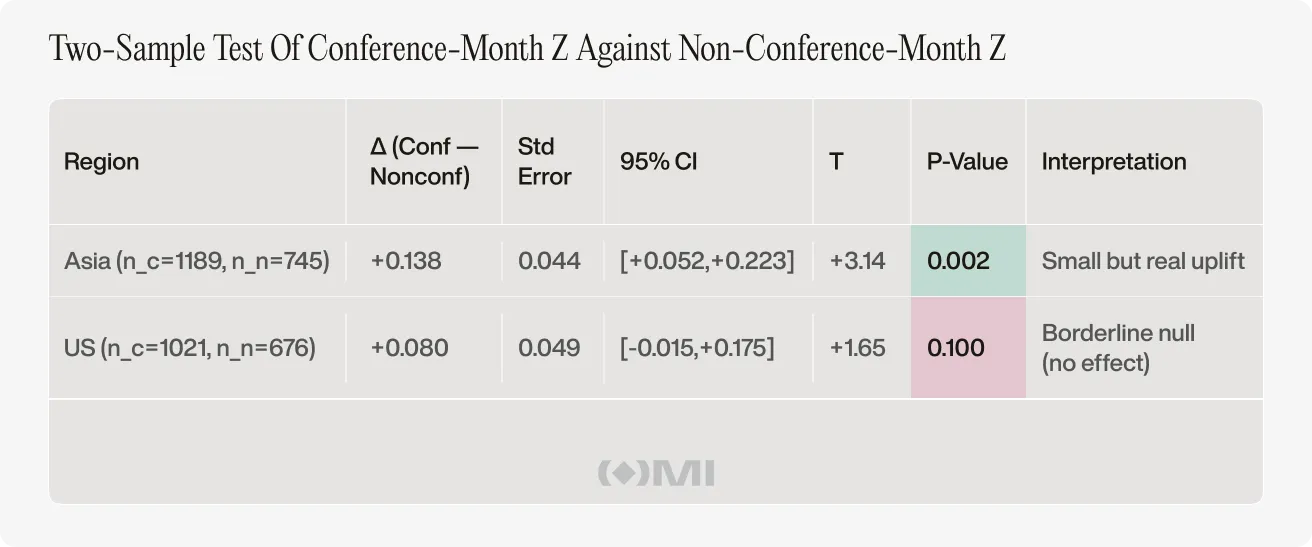
US publishers barely shifted during conference months. Asia showed a stronger lift, but much of it was concentrated in one October 2025 cluster that also overlapped with BTC’s cycle top and a historic liquidation event.
The analysis doesn’t argue that conferences are useless. Meetings, booths, investor conversations, speaker slots, and founder visibility can all create business impact. The point is that teams should separate the physical value of the room from the digital noise that may have happened anyway.
In the full version of this report, you will find the regional breakdown, BTC control checks, and a closer look at what drives conference-month traffic.
The signals look obvious – until you test them
All three reports point to one pattern: the signals crypto teams follow most – headlines, traffic, conference buzz – often describe what already happened, or what’s happening somewhere else, rather than what produces real outcomes.
That’s why surface-level visibility can be misleading without context. Once you start testing these signals against market structure, on-chain activity, and timing, the picture changes.
Subscribe to Outset Media Index on Substack to get the full datasets, charts, and methodology behind each report delivered straight to your inbox – and to catch the next signals worth questioning for your media strategy.


