
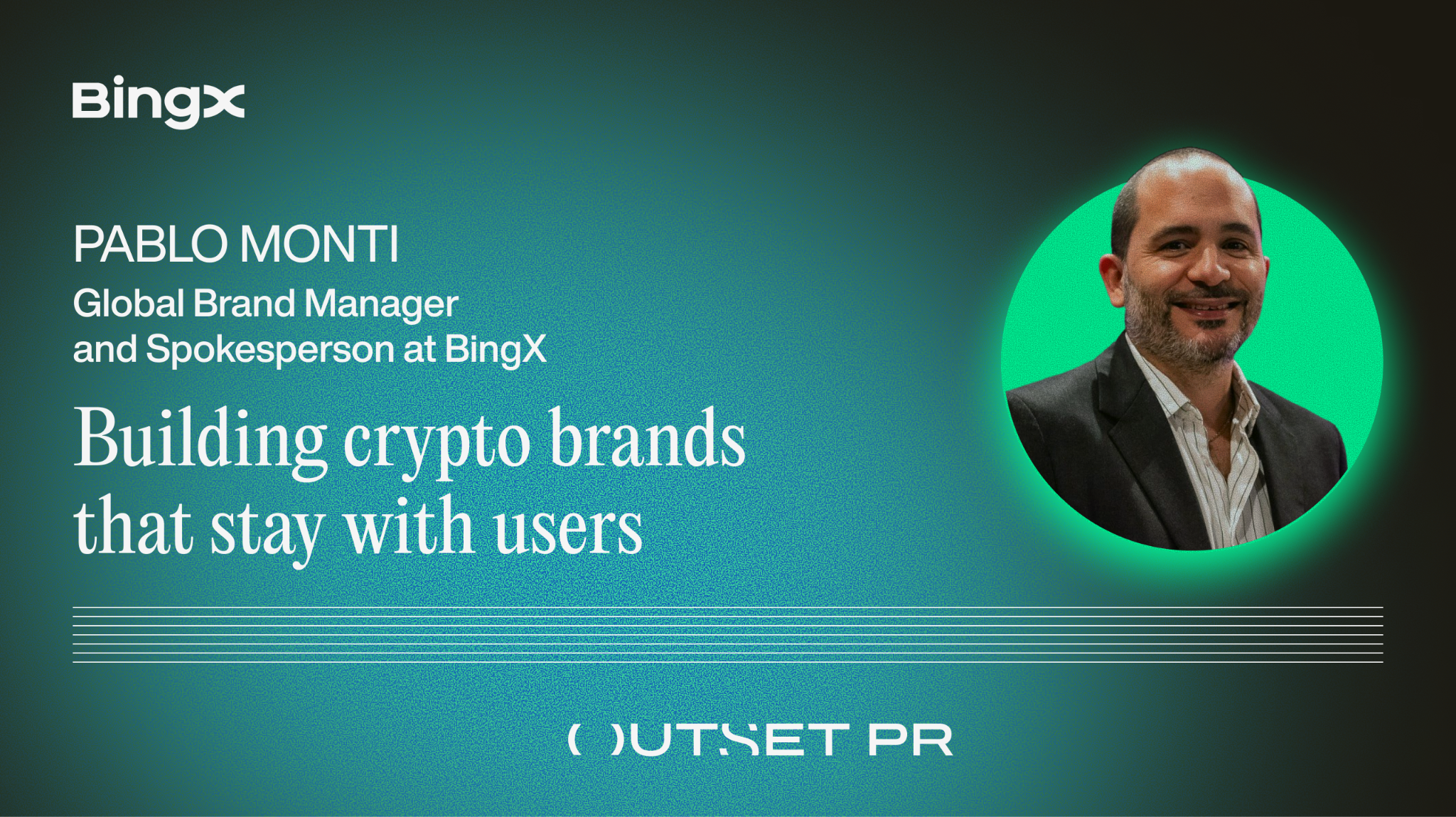
Pablo Monti spent most of his career in the sports and esports industry. He led the content strategy for Argentina’s top sports TV channel, oversaw PR and marketing for the local Handball Confederation, and contributed across communications, journalism, advisory, and education. Those were very different environments, but all of them, he says, shaped the experience that would otherwise be hard to replicate.
Just like Julia Magas, Pablo had a chance to sit on both sides of the table: he used to be someone receiving PR pitches, and now he's the one sending them.
“That perspective taught me what works, what doesn’t, and, most importantly, how to create relationships and stories that provide real value,” Pablo elaborates.
Relationships and honesty have carried him furthest after years of hands-on work in crypto and Web3 communications. As someone who has always been curious about people, Pablo insists that these things can’t be rushed and should be built with intention.
“Once a person knows you and trusts you, everything is smoother.”
Sports partnerships create genuine connections
Having come from a sports background, Pablo sees bridging it with crypto as one of the most challenging but rewarding parts of his role at BingX.
“The audiences have different fluency, emotional triggers, and expectations from brands, and learning to speak to both authentically is something we work on constantly,” he reveals.
At the same time, through their renewed partnership with Chelsea FC, now entering its third year, the brand has become more than the club's training kit sponsor. It has built associations that conventional communications simply can't achieve.
“It is not that traditional PR fails; it is that sports partnerships are after something entirely different – a shared identity with communities that already have deep loyalty and emotion attached to them,” Pablo clarifies.
Unlike companies that look at sponsorships primarily as a visibility play, BingX is committed to launching joint activities that strengthen long-term connections with users. For example, inviting VIP traders to Chelsea's training ground or giving them the opportunity to attend matches in person.
Per Pablo, the most meaningful value here can’t be quantified with metrics.
“It is as much about giving back to the people who trust us as it is about getting anything in return.”
A strong brand is essential for audience retention
Partnering with respectable brands from other industries, such as Chelsea FC and Scuderia Ferrari HP, helped BingX reach new audiences who align with what they stand for. Still, developing their own identity proved crucial because crypto products are incredibly complex under the hood even if they often compete through similar features, incentives, and offerings.
“Part of my job [in branding] is figuring out whether we need to educate people on the technology or create an experience smooth enough that they barely feel like they are interacting with crypto at all,” explains Pablo. “That decision depends on who we are talking to: for newer users, we meet them where they are; for seasoned traders, we can go much deeper.”
He also notes that BingX learns about its local communities, which means understanding what is actually driving adoption in each region and reflecting that understanding in everything from the product to the offline presence.
“In Latin America, stablecoins are central to how people use crypto, so we center our messaging there accordingly, and we show up in person through events connected to soccer culture. In Brazil, we even hosted a Carnival activation.”
However, when asked about what makes a crypto brand memorable in 2026, Pablo didn’t give a definite answer. From what he observed at BingX, memorability comes from consistently showing up with something meaningful for users, whether they are drawn to cutting-edge products, TradFi-oriented offerings, or have simply been with the brand for eight years and never left.
Thought leadership is getting more specialized
Thought leadership is where our conversation came back to building relationships. Pablo regularly writes for media outlets such as Cointelegraph and BeInCrypto, and because he knows many of those journalists personally, he can show up as himself rather than just a spokesperson.
“I take real pride in producing content that moves the industry forward and reflects my own ongoing education in this space, not just what BingX needs to say this week.”
Education, though, is a sticking point. While Web3 is a relatively young industry, public speakers tend to recycle the common knowledge again and again, hoping this will eventually establish them as industry voices. Pablo thinks the opposite: the most compelling thought leaders go deep on their specific niche and truly own that corner of the space.
“The industry doesn’t need more generalists; it needs more people who are experts and can speak with authority.”
Sharing his perspective on how artificial intelligence affects thought leadership, Pablo doesn't see AI accessibility as a global threat. If anything, he believes it brings real positives to the industry, allowing people to synthesize large volumes of information and data quickly.
Yet he admits that “the challenge, and the opportunity, is that authentic human perspective stands out more than ever precisely because so much content can now be generated at scale."
The best communicators put people first
The speed of communication in Web3 is unlike anything you see in traditional finance. Six-week press release cycles give way to real-time user engagement via social media. At the end of the interview, Pablo reflects on how the role of branding changes inside crypto businesses.
“I think the companies that thrive will be those that maintain directness and responsiveness while also building the credibility and consistency users expect from more established institutions.”
According to him, the most valuable assets a communicator can have in this reality are authenticity and intentionality. On top of that, the ideas and voices that are clearly human, considered, and rooted in real relationships are becoming decisive as AI continues to reshape how people create content.
As Pablo concludes, “The next generation of brand leaders will be the ones who know when to use the tools and when to put them down, and who don’t lose sight of the people they are actually trying to reach.”


